Categories
Writing Life

Behind the cover reveal

Small! cover (mocked up with help from diybookcovers.com)

1. The illustrator

Rory Walker

Rory is an absolute marvel. I’m convinced most illustrators would have heard the brief, ‘can you draw me a friendly undead elephant with a visible skeleton and shimmery shadow memory of its former body’ and run a mile.

Not Rory.

His madcap cartoonist style couldn’t be a more perfect fit for Small! I was in love the moment my editor, Mikka, shared Rory’s first rough sketches last summer. And the final designs bring so much fun to the story – I hope young (and old) readers will giggle as much as me when they see them.

All the illustrations on the cover appear in black and white inside the book. And if you take a look at Rory’s website, you might get a sneak peek of a few more, including every author’s dream – a map!

2. The cover designer

Holly Ovenden

Sometimes your illustrator will be your cover designer too, but not always. (After all, they’re very different skills – I wouldn’t ask a pastry chef to whip me up a bouillabaisse.)

Holly’s a superstar of the book design world. She was named a Bookseller Rising Star in 2021 and shortlisted for Designer of the Year at the British Book Awards. (Take a look at the work on her website and you’ll see why.) So I’m totally honoured she agreed to work on my cover.

The colour, the lettering and the layout of the Small! cover were all Holly’s vision. I don’t think it’s easy working with someone else’s illustrations to create something new – but Holly’s design really pops. I totally LOVE it, and I hope you do, too.

3. The cover revealer

Jo Clarke aka BookloverJo

Not every book has an official ‘cover reveal’, but adding one to your publishing calendar is a fun way to keep the excitement going between your book announcement and the actual launch. And it helps people recognise your book when it lands in the shops.

My cover reveal happened on Twitter this afternoon, courtesy of the lovely BookloverJo. Jo is a school librarian, kidlit book blogger and soon-to-be debut author herself. Jo’s first book, Libby and the Parisian Puzzle publishes on 3rd March with Firefly press and you can pre-order now in all good bookshops.

Jo is an expert cover revealer, having done many a reveal before mine. And why do so many authors like me call on her? Well, as a librarian and blogger, Jo definitely has ‘kidlit influencer’ status. By revealing the cover, Jo’s not just making the moment feel even more special, she’s also helping lots more people see it. Thank you, Jo!

Disclaimer: In the spirit of my ‘three things’ format, I’ve stuck to describing three people who’ve had a big impact on the cover. But of course, huge thanks go to my publisher for teaming me up with such talent, and my agent for sharing her advice and artistic wisdom along the way, too. Publishing a book really is a team sport…

I’ve loved learning about cover design over the last few months. Do you have a favourite illustrator, cover designer or cover? Tell me about them in the replies.
Categories
Practical tips Writing Life

Writing resolutions

Give guilt the boot

When we’re still filled with festive cheer and the stress of the day job is a distant memory, it’s easy to set rigid writing goals. Sticking to them when reality bites is a whole different matter.

So, in 2022, I’ve decided NOT to set a daily word-count goal, or even to commit to writing daily. The chances are, I’ll still write most days because 1) I love it, 2) I feel genuinely sad when I’m not writing. But if work or life gets in the way sometimes, I won’t be beating myself up about it.

Instead, I’ll write my socks off whenever I can, and I’ll stay focused on big overall goals (like writing a sequel and pitching a non-fiction book). Then I’ll get there in whatever way I can, no matter how scrappily.

Fill your notebooks

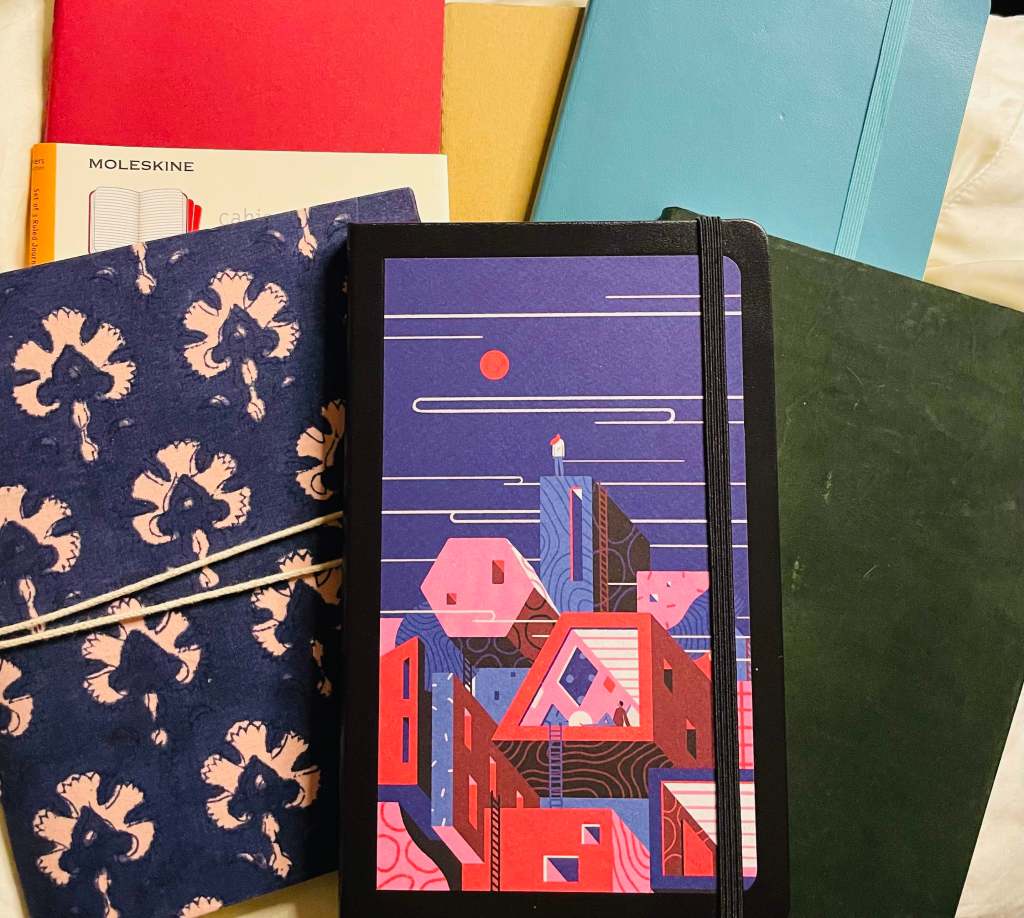
Notebooks are there to be written in. (Yes, even the ones with the fancy hardback covers and gold sprayed edges.) This year, I refuse to be intimidated by the beauty of a notebook, and neither should you. It’s your words that make notebooks valuable. Fill them. Fill them. Fill them.

A few of the notebooks I plan to fill this year

Be the writer only you can be

In 2022, I’m going to try really, really hard not to compare myself to other writers, or read their books and come away thinking things like, ‘Their words are so beautiful, I wish I could write lyric poetry…’

Instead, I’ll cheer and champion every writer’s brilliance (something I try and do already). Then I’ll get back to being the chaotic, daft and generally bonkers writer I already am.

It’s easy to dismiss your own writing style, especially if it comes easily to you. For ages, I thought ‘well anyone could write like this, everyone else must be choosing not to.’ It’s only really since early reviews have come in for my debut middle grade book, Small! that I’m starting to think that my particular brand of storytelling might actually be my strength.

Whatever your writing style, I hope you embrace it in 2022. I’ll be right here to cheer you on.

Good luck.

(PS if you fancy reading a bit of bonkers MG, you can pre-order Small! with the lovely Rocketship bookshop.)

What are your writing resolutions? Share them in the replies
Categories
Inspiration KidLit Practical tips

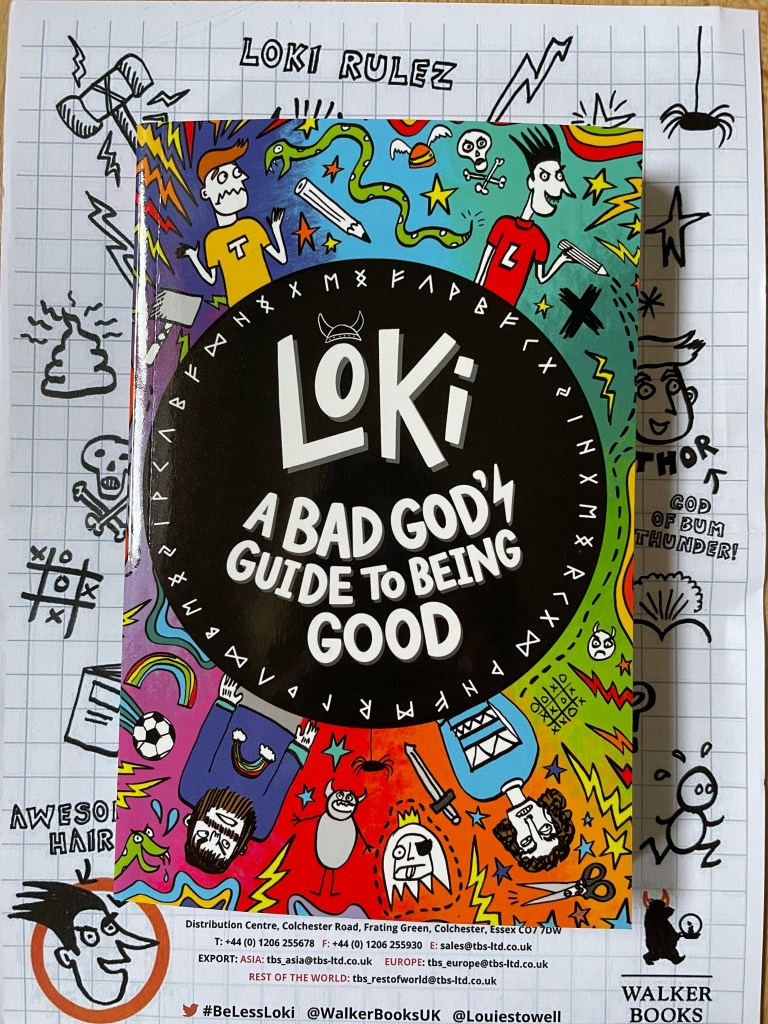
Loki: A Bad God’s Guide to Being Good

Proof copy for Loki: A Bad God’s Guide to Being Good

1. It’s a diary, done differently

Play with form

Who doesn’t love a diary? They’re the perfect place to enjoy the comedy antics of unreliable or naive narrators. (Emer Stamp’s, The Unbelievable Top Secret Diary of Pig is another of my all-time comedy favourites for that reason.) But what’s so smart about Loki’s diary is that he’s not allowed to lie. Every time he tries, the diary ‘helpfully’ writes back with its own corrections. It’s a brilliant device. And it’s a great reminder that no matter how familiar your format, there’s always a way to twist it and make it your own.

2. It’s funny because it’s true

Find the funny in front of you

As an outsider to the modern world, Loki is the perfect observational comedian. He’s constantly questioning the absurdity in the everyday, giving us his views on everything from work, school and shopping to crisps and – my favourite – museums. Loki can’t believe how boldly museums display their stolen goods (he’s far too sneaky to make his own wrongdoings so obvious).

Loki’s insights into life cracked me up and got me thinking. Mostly, they reminded me of the GK Chesterton quote that funny doesn’t have to be the opposite of serious. Loki’s comedy definitely has a serious side.

Funny is the opposite of not funny, and nothing else.

GK Chesterton

3. It brings new life to old stories

Build on what we know

We get a few specific nods to the original Norse myths, but Louie mostly uses them as a springboard for fresh silliness. I especially enjoyed Thor (who’s on Earth as Loki’s brother to keep an eye on him) wanting to spend his weekends admiring hammers in the DIY shops.

Using things we already know (or learn in the first couple of pages) sets the stakes high from the start. Will Loki, the misbehaving trickster god, ever manage to live a virtuous life? Or will Odin punish him to an eternity in a chamber filled with snakes?

This isn’t a retelling of the myths. It’s dropping familiar characters into new settings and asking the question that gets all the best stories going: ‘What if..?’ It’s also a brilliant way to go from a blank page to a fresh, funny and completely original new story.

I was rooting for Loki from the start. I’m sure everyone else will, too.

Loki: A Bad God’s Guide to Being Good publishes with Walker Books in February 2022. Pre-order yours now. (That’s my Bookshop.org page, but I’m sure you can order it in your local indie, too.) #BeLessLoki

Categories
Writing Life

In praise of pantsing

Pantser (n) someone who writes by making things up as they go along (or flying by the seat of their pants)

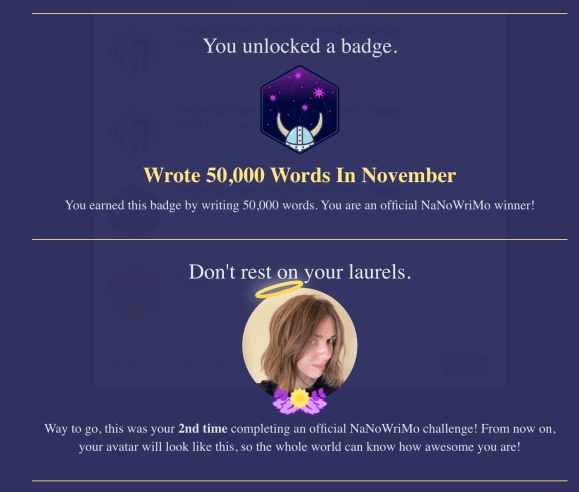
The winner’s badge on the NaNoWriMo website

1. It takes the pressure off

I’m writing a sequel at the moment. Which basically means, I’m filled with ‘second album syndrome’ fear, and piling the pressure on myself. Or, I was. Then I signed up for NaNoWriMo and swapped screen fright for scribbling.

National Novel Writing Month was made for pantsers – how else can you scramble your way to 50,000 words in a month? It’s a glorious, community-driven, slightly sleep-depriving way to write. But it’s also bags of fun. By Tuesday night, when I finally crossed the finish line, I had loads more words than I needed (my sequel won’t be more than 30,000). I was also bursting with ideas for the next draft.

2. It gives your brain room to roam

That’s the joy of pantsing. When you’re not following a carefully plotted plan, there’s nothing stopping you taking your story in any direction you like. I started November with a vague idea of what might happen. But almost all my favourite scenes now are things I’d never even considered a month ago. When I’m going for quantity, not quality, I can pull all sorts of weird (and hopefully wonderful) ideas from the depths of my brain.

Pantising is taking the scenic route rather than powering down a motorway. It’s not the fastest way through a book, but the view’s so much better.

3. It gives you something to edit

Nothing beats fear of the blank page like a quick and dirty first draft. The sooner you get some words down, the sooner you can knock them into shape.

A month of pantsing has been absolutely brilliant. Now I’m (just about) ready for the proper plotting begin.

Are you a plotter or a pantser? Let me know in the replies.
Categories
Inspiration

Punctuation inspiration

1. Punctuation as art

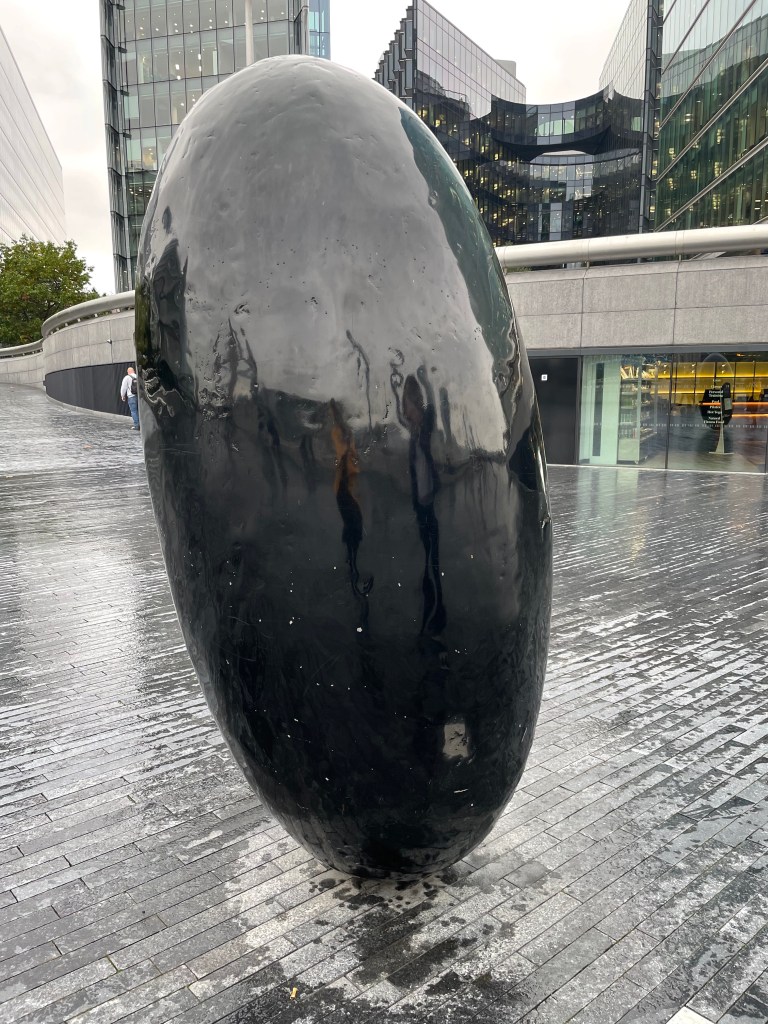
Full Stop Slipstream, Fiona Banner

Full Stop sculpture, More London

Ahh, the full stop. It’s taken a lot of stick lately for being aggressive – making most of us drop it from the end of instant messages.

But thanks to Fiona Banner’s sculpture series in More London, here’s a very concrete (well, bronze) reminder of this simple punctuation mark in all its glory.

This one’s in an italicised font called Slipstream. (But I took a terrible photo, so you can see it looking much nicer, and facing the right way on Fiona’s Instagram page.)

2. Forgotten punctuation

The interrobang

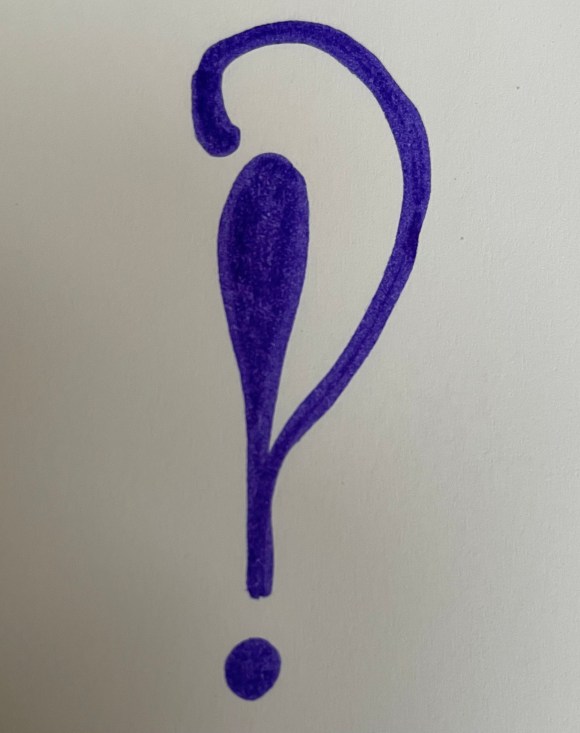
Interrobang. I loved this word for the ?! combo the moment I heard it. But I hadn’t realised it originally came with its own symbol, too (which I’ve attempted to draw).

Martin Speckter suggested creating the single punctuation mark as a symbol of incredulity back in 1963, but by the 1970s it had fallen out of fashion. And it’s not the only new punctuation people have suggested.

My drawing of an interrobang (a question mark wrapped around an exclamation mark)

According to Mental Floss, printers, authors and philosophers have championed punctuation marks for irony, rhetorical questions and even love.

Although those new punctuation marks didn’t take off either, I reckon they paved the way for today’s emojis, which pretty much cover every emotion from 😂 to 😡. I even found a romantic exclamation ❣️ (or the lovebang, if you will).

3. Only the punctuation

Just-the-punctuation.glitch.me

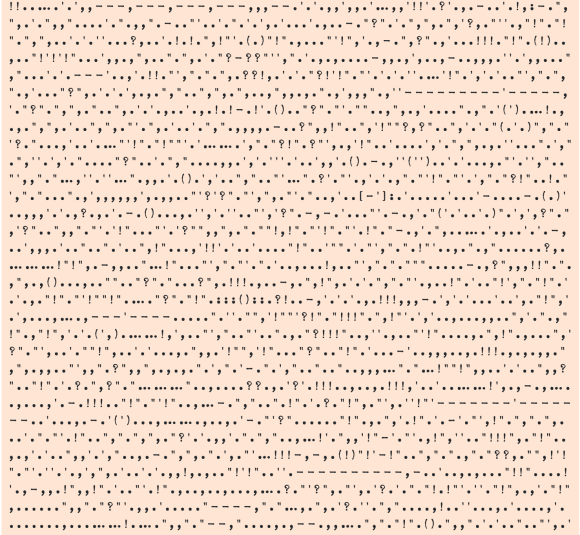
The punctuation in the first half of my upcoming debut, Small!

Since a friend shared the link to this word-stripping website, I’ve become slightly obsessed with it. Type in whatever you’re working on to see how your WIP would look without any words.

Here’s the first half of my upcoming debut, Small! With exclamation marks and full stops galore (although no true interrobangs, sadly) you can probably guess the reading age just by looking at it.

And for all my wafflings about the end of full stops and the rise of emojis, good old-fashioned punctuation will be welcome in my stories any day.

Categories
Practical tips

Announcing your debut

1.Your first book might not be ‘the one’

Always have another project on the go

I thought signing with an agent would make getting published plain sailing. Alas, when the book that bagged my agent didn’t bag a publisher, I learned things don’t always work that way.

Luckily, by the time the rejections came through, I was totally immersed in the new project that became SMALL! So although the ‘no’s were disappointing, I was having enough fun in my new giant world to keep my chin up. That’s the big thing I’d recommend to anyone going on submission: always have another project on the go.

2. There’s probably a long wait ahead

Find a debut community

The next thing I hadn’t realised was how long you have to stay quiet about your book deal once you’ve signed it. (It was about eight months for me, but when telling the world about your book deal is the most exciting thing to have happened to you in the history of the world ever, those months feel like years.)

To handle the wait, find other writers who are waiting, too. I joined a Twitter group for 2022 debuts and it’s been the best place to quietly chat about the ups and downs of the publishing journey.You can see what the group’s up to (when we’re allowed to share news) by following @2022Debut on Twitter and Instagram.

3. Enjoy the moment…when it comes

Seriously, enjoy it

I love telling stories. But that doesn’t mean the rejections that paved the way to publication – whether getting a (constructive) battering in a crit group, a form rejection from an agent or a ‘no’ from a publisher – didn’t sting.

My debut was announced to the world yesterday. And, for now at least I’m allowing myself time to grin widely, skip wildly and check Twitter ever so slightly obsessively (I’ve been overwhelmed by the love and excitement people are showing SMALL! on social media. The kidlit writing community really is the best).

There are tough days in this writing game, but boy are the good days glorious.

Categories
Inspiration

Inspiration from art

The Royal Academy Summer Exhibition opens to the public next week. I was lucky enough to sneak in early and pick up some word wrangling inspiration.

There were over 1,300 pieces on display. Here are three that might help you crack your next story.

1. Opening image

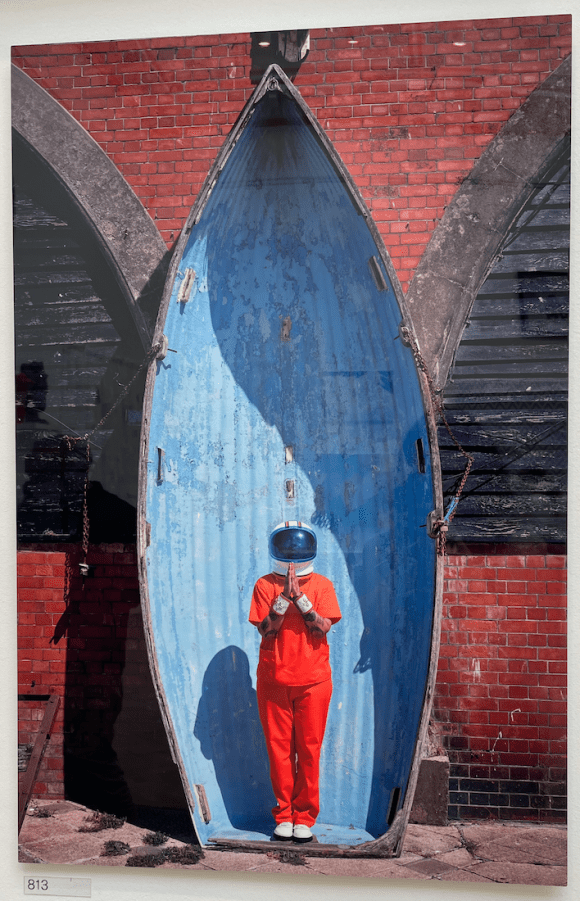
Divinity, Lola Flash

Struan Murray says he started Orphans of the Tide with one strong image in mind: a whale stranded on a chapel rooftop.

Exhibitions are always packed with visual story starters. And, for me, Lola Flash’s photo of a mysterious praying figure against an upturned boat has the hallmarks of a cracking opening image.

  • Who are they?
  • What do they want?
  • Where have they come from?

I can’t look at it without wanting to reach for a pen to find answers.

Lola Flash’s Divinity

2. Setting

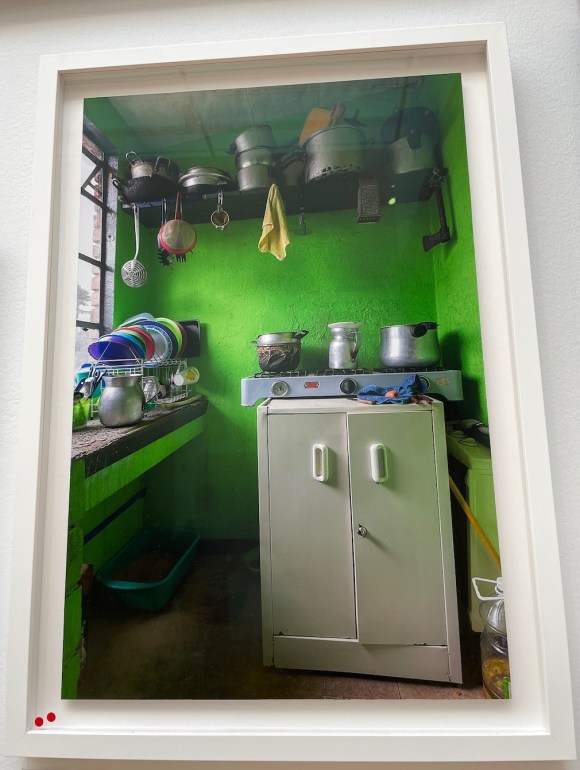
Green Kitchen, Bogotá, Caroline Peña-Bray

Green Kitchen, Bogotá, Caroline Peña-Bray

I have a dreadful habit of writing first drafts in a vacuum – with characters doing things in spaces that are impossible to picture.

But getting the setting right makes telling the rest of the story so much easier. That’s where a good gallery can help.

Look at the personality bursting from Caroline Peña-Bray’s ramshackle kitchen. It’s hard to imagine any scene set here not being full of noise and life, too.

What do your settings – from the colours on the walls to the amount of clutter crammed onto the shelves (or not) – say about your characters? If your settings aren’t saying much, perhaps they’re not working hard enough.

For more world-building inspiration, make a beeline for the RA’s architecture room, where full models of buildings and cities are laid out in front of you. They’re such a help if, like me, you’re not great at visualising the places in your book.

3. Character

I Bite & Sting: Mosquito and Jellyfish, Stephen Chambers

I Bite & Sting: Mosquito and Jellyfish, Stephen Chambers

Have you ever seen a more terrifying, ready-made villain than Stephen Chambers’ jellyfish? This etching gives me the creeps, and also gets me wondering what evil sting plot is going on behind those very big eyes…

Galleries are great places to find your next characters – heroes, pets, sidekicks and evil jellyfish overlords alike.

The RA Summer Exhibition is on from 22nd Sept-2nd January 2022. Tickets are £20-£22 (and if you buy anything, you get a free ticket the following year). If you make it along, tell me about your favourite pieces in the replies. #RASummer

Categories
Practical tips

Building a website

Disclaimer: I have *no* idea how to build websites (this one’s my first). But if, like me, you want a website that doesn’t cost a fortune, this might help.

1. Platform

WordPress.com vs WordPress.org

There are a few web design platforms, like SquareSpace, built with newbies in mind. I opted for WordPress because I’d love to add my own code to the site one day and, from what I can tell, WordPress is one of the few places that lets you. (I did a Python coding course once and am determined to use it!)

But…it’s only easier to add code if you choose the right WordPress. Which I didn’t.

Yep, there are two versions of WordPress – with the same look and logo. WordPress.com (which this site’s on at the mo) and WordPress.org.

WordPress.com is good for beginners because…

  • It’s free (once you’ve bought your domain name)
  • It hosts the site for you
  • It’s designed with blogging in mind – so it’s really easy to write posts like this

There are paid options too, which you can sign up for to get rid of adverts and get a bigger choice of templates. I accidentally bought one of these packages initially, thinking it would let me add my own Python code later. When I realised I was wrong, getting a refund was nice and easy.

But WordPress.org gives you more control

Ultimately, this was the platform I should have chosen because even though you have to find and pay for your own hosting, you can also add your own code. So you get a lot more say over the final look and feel.

That said, I think WordPress.org is probably for people who already have some web design game (which I don’t). So even though I chose .com by mistake, I think I’ll stay here a bit longer while I’m finding my feet. Expect another blog next year on the trials and tribulations of transferring a website from .com to .org!

2. The theme

Pick one with enough pages

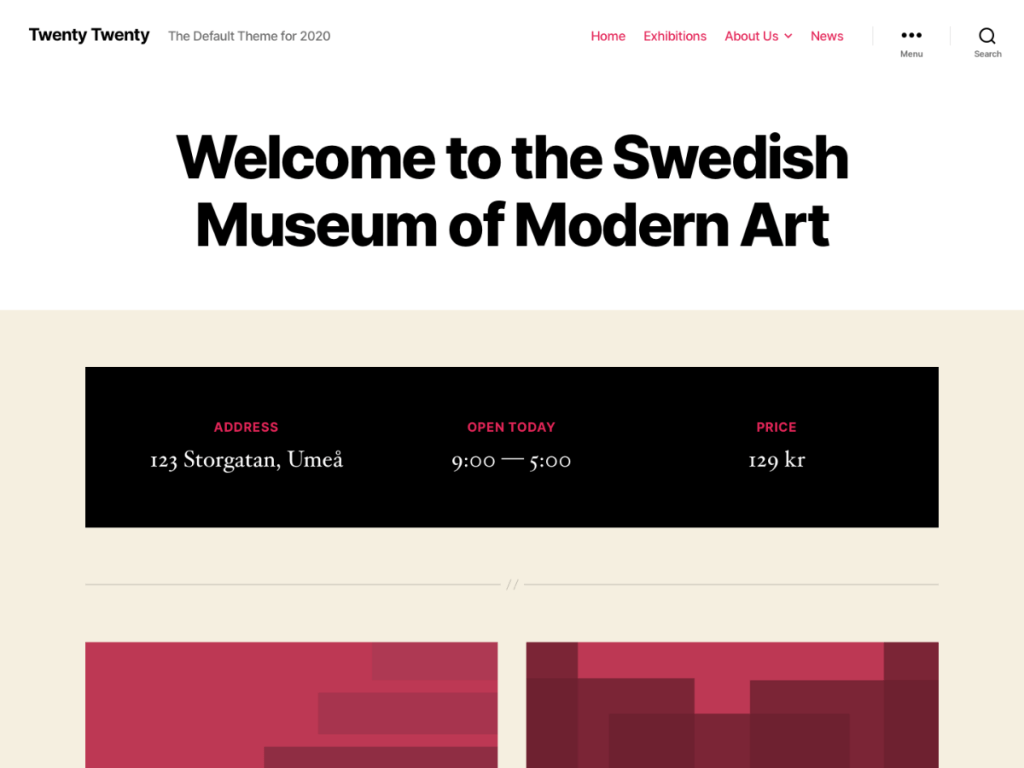
The Twenty Twenty Theme…and my actual homepage for half an hour last Wednesday

I’m no designer, so knew I’d need a template to build my site. They’re called themes and they have all the navigation you’ll need built in. If you choose the right one.

I originally picked a one-page design called Baker. I thought it looked really slick…until I wanted to add more pages and came unstuck.

If you know you’ll want more than a single-page site, it makes sense to pick a theme with more pages in mind. (I’m now using the free Twenty Twenty theme instead.)

But, be warned: if you switch themes, take your site offline first!* I didn’t and for half an hour last Wednesday, I claimed to be a leading Swedish museum of modern art. Which, of course, one of my friends spotted and used as an hilarious excuse to prank email me art questions…

For half an hour last Wednesday, I claimed to be a leading Swedish museum of modern art

There are enough free themes on WordPress.com to get you started. But you can always upgrade to get more.

*You do that by going to your dashboard, choosing Settings – General – Privacy and checking the ‘Coming Soon’ box. You can also switch any page you edit to ‘draft mode’.

3. Make it yours

Why Canva is awesome

I was chatting to my author friend, Amita and admiring her website, when she revealed her design secret: Canva. The site lets you design web banners, social media pics, logos…and the ‘3Things’ images I’m using to promote these blogs.

Canva’s great, because it gives you a way of making your site look a little bit different, even using a standard theme. It’s easy to use and, so far, I’ve been able to do everything I need with the free version.

To get started, it helps to know the size of pic you want, so you can build the right template (otherwise, re-sizing is a pain without upgrading to the premium account). All my blog ‘featured images’ as WordPress calls them, are 1200 x 675 pixels.

It’s a lovely tool, and one I wouldn’t have thought to use on a website without Amita’s help. To thank her, I think we should all pre-order her historical fiction 2022 debut, The Circus Train which is full of magic and science and medicine and, frankly, sounds fabulous.

Have you attempted to build an author website yet? What top tips would you share? Let me know in the replies.

Categories
Gifts for writers

Gifts for writers

1. Literary postcards

Obvious State

Selection of Obvious State Postcards from the SHE collection

Obvious State are a New York-based brand, but they also have a UK Etsy shop. When I signed with my agent, my husband gave me their SHE postcard box (in the pic above). Each card features a quote from a famous female author, set against a striking illustration.

Although I can’t find this exact set in the Etsy shop at the mo, they have smaller packs of 24 literary postcards with very similar designs. They also make prints, notebooks, bookmarks and even t-shirts.

All perfect gifts for writers who like pictures as much as words.

2. Medic bag

Galen Leather

Writer’s Medic bag and personalised pencil case

I stumbled across Galen Leather when another writer posted pics of their (currently sold out) Writing Box, which was apparently inspired by Thomas Jefferson’s portable writing desk.

But I love their new medic bag even more. Not least because the bag – designed in the style of a Swiss army medic bag – is also a tribute to Galen’s founder, Zeynep, who sadly died in 2019. This was her last design, and boy does the final product do her proud.

It comes in two sizes and a few colours. I have the smaller one in Forest Green. It’s large enough to carry six pens and a couple of highlighters in separate holders plus a phone and small pencil case. It’s also got pouches for cards, a zip pocket, keyring and space for an A5 notebook or two.

And, quite frankly, it’s fun. I love its vintage look and the way its magnetic sides let you spread its contents over a desk. This is definitely the type of bag that would get attention on author visits. I know child me would have been besotted by it too.

A perfect gift for writers on the move who want to carry their stationery in style.

3. Beautiful hardbacks

The Folio Society

Folio edition of Neil Gaiman’s Anansi Boys

Oh my goodness, I love, love, love The Folio Society. One of my lifetime #WriterGoals is to write a book that Folio later publishes. So if you know anyone at The FS, feel free to pass that on… 😉

Their hardback, illustrated editions of loved books are real works of art. And they have a decent range of children’s books, alongside nonfiction and fiction titles.

My Folio copy of Neil Gaiman’s Anansi Boys is stunningly illustrated by Francis Vallejo and comes with fabulous spiderweb spredges (sprayed edges).

Best of all, while being lovely to look at, The Folio Society’s books feel robust enough that you’re not scared to sit down and actually read them. Which, afterall, is still the point of a book.

A perfect gift for anyone who wants a special edition of a favourite story to treasure forever.

What would you buy the word wrangler in your life? Or is something special on your wishlist?

Leave a reply to let me know (then maybe we can go shopping)

Categories
Practical tips

Writing courses

Before I wrote for children, I was already a writer. I’ve been scribbling ads, reports, brochures and web copy pretty much since I left uni.

So writing a children’s book would be a doddle, right?

Wrong.

I wouldn’t have got anywhere fast without three marvellous courses to help me on my way.

1. Start the book

City Lit’s Writing for Children

City Lit run lots of affordable courses for children’s writers (and since the pandemic, most have moved online).

But it was Lou Kuenzler’s Writing for Children courses that helped me start writing and keep writing.

Lou’s published heaps of brilliant children’s books , so she knows what she’s talking about, and can empathise with the trials and tribulations of finding agents, going on submission and holding your nerve as you wait (seemingly endlessly) for news.

She runs a course for beginners as well as a writing workshop, which is pretty much the best critique group imaginable. Lou’s an extraordinarily perceptive and constructive critic and creates just the right atmosphere to encourage everyone else to give useful feedback, too.

Lou’s an extraordinarily perceptive and constructive critic

As well as finishing my first children’s book with Lou, I met many a brilliant word-wrangler and friend.

Recent alumni include:

2. Stay inspired

Masterclass

I’m a massive Neil Gaiman fan, so when he designed a course for Masterclass, I was there. His words of wisdom always give me a lift. (My favourite being a reminder that if an early reader tells you something isn’t working, they’re probably right. And if they tell you how to fix it, they’re probably wrong.)

But Neil’s not the only reason I’ve stuck with my subscription.

If I’m ever after a fresh perspective, I bypass the writing courses and listening to the many actors, composers, comedians and artists on the site instead.

A bit like the old trick of reading your writing upside down to spot mistakes, looking at creativity from a different angle has a knack of unlocking knotty problems for me.

Of the three courses on here, this one’s the least interactive (for me). Technically it comes with forums and workbooks, but I can’t resist simply sitting back and enjoying the beautifully shot videos.

3. Edit the book

CB Creative’s Edit and Pitch your Novel

After finishing my first manuscript and getting a fair few agent rejections, I decided my book wasn’t quite as finished as I thought. And I turned to Curtis Brown’s 6-week online course for help.

Anyone can sign up, not just children’s writers, and the online platform made it easy to get to know people.

Within a couple of lessons I realised my book REALLY wasn’t finished

Within a couple of lessons, I realised my book REALLY wasn’t finished and, using CB’s excellent editing technique, I embarked on a major rewrite.

As well as helping you look at structure, the course covers perfecting your synopsis and agent cover letter. I also took the option to pay for an editor’s report at the end to get feedback on my whole submission package.

Before the course, I’d only had form rejections from agents. After it I came away with two full requests and found my agent!

If you’re not sure why your submissions aren’t working, I can’t recommend this course enough.

Have you been on any brilliant writing courses you’d recommend? Leave a reply to share the love